Timeless pieces. No logos. No noise.

The Oxford Cloth Button-Down: America’s Most Versatile Shirt
The Oxford cloth button-down evolved from polo practicality into America's most versatile shirt. Learn the three essential colors, proper fit principles, and how to pair it with everything from chinos to denim.
In this article11 sections
- Where the Oxford Cloth Button-Down Comes From
- The Color Rotation That Actually Works
- What Proper Fit Actually Means
- Pairing: The Chinos Foundation
- With Denim: Breaking the Casual Rule
- Layering Strategy: The Sweater Layer
- Care That Adds Character
- Building Beyond the Basics
- The Durability Question
- How to Know If an Oxford Truly Fits
- Frequently asked questions
Where the Oxford Cloth Button-Down Comes From
The Oxford cloth button-down shirt arrived in America not as a design innovation but as a practical borrowing. British polo players in the 1930s needed a shirt that stayed tucked during rides; they pinned their collar points down to their chests. An American manufacturer saw the logic, added buttons, and the OCBD was born. What began as function became aesthetic. Seventy years later, it’s the uniform of anyone who values quiet confidence over label visibility.
The fabric itself matters. Oxford cloth weaves two threads (one light, one darker) in a basketweave pattern, creating a textured surface that looks lived-in from day one. Unlike smooth cotton dress shirts that demand frequent pressing, oxford cloth resists wrinkles naturally. The weave also gives the shirt weight. A proper oxford hangs with body rather than clinging; it looks intentional without looking formal.
Button-down collars solve a problem most people no longer notice they have. Without buttons, collar points roll outward as you move, pulling the eye upward and making the shirt feel uncontained. The buttons keep points folded down, anchoring the line of the shoulders. The effect is quieter, more grounded. A spread-collar dress shirt announces itself; a button-down recedes into the background, which is precisely the point.

The Color Rotation That Actually Works
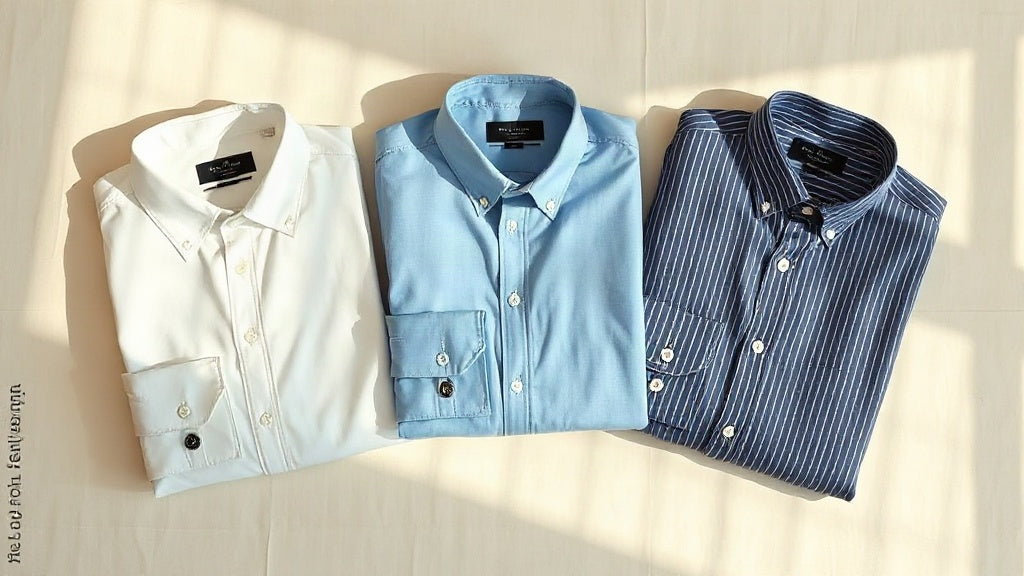
Three colors form the foundation: white, light blue, and a subtle stripe (usually navy and white or blue and white). Start with white. A crisp white oxford works with every bottoms choice and reads as either effortless weekend or capable professional depending on what you layer over it. The fabric’s texture keeps it from feeling sterile; you’re not chasing a runway shine.
Light blue comes next. Pale blue (sometimes called sky blue or university blue) sits between white’s formality and the boldness of royal blue. It pairs naturally with gray trousers, tan chinos, and navy trousers without competing. The hue is forgiving; it won’t yellow over time the way cheaper white cottons do, and it softens against skin tones that might clash with pure white.
University stripe (2-3 mm stripes in navy and white, or light blue and white) functions as the weekend piece. It suggests ease without sloppiness. The stripe prevents the shirt from disappearing entirely while keeping the overall effect understated. Many people buy university stripe expecting to wear it casually, then find it works equally well under a blazer paired with wool trousers.
Beyond these three, the oxfords worth owning are solid colors that already exist in your trouser drawer: charcoal, navy, olive, burgundy. Each anchors quickly to existing pieces. Avoid novelty colors or patterns; they date faster than the fabric quality justifies.

What Proper Fit Actually Means
The oxford cloth button-down should fit slightly relaxed through the body, not draped, not fitted. Your hand should slide easily into the shirt between fabric and ribs. Sleeves roll to mid-forearm without tightness at the bicep. Shoulder seams sit at the actual shoulder point, not forward or back. The hem reaches the lower hip, long enough to stay tucked through movement but not so long that excess fabric gathers at the waist.
Length matters more than most people understand. A shirt that’s too short rides up when you sit or reach; a shirt that’s too long creates bulk under any tucked silhouette. If a shirt fits everywhere except length, have it tapered. The cost (usually $20-30) is worth the difference in how often you actually wear the piece.
Collar roll is not a defect. The button-down collar naturally relaxes and softens with wear. A new shirt sits flat; after three or four washes, the collar develops a gentle roll that looks intentional and sits better against the neck. This is aging well, not wearing out.
Shoulder width cannot be altered easily and matters more than most tailoring. Too wide, and the shirt slides down your arms; too narrow, and fabric bunches at the armhole. Try on several makers if first attempts feel wrong. Fit issues at the shoulder suggest trying a different brand’s pattern rather than fixing via tailoring.
Pairing: The Chinos Foundation
An oxford cloth button-down with chinos forms the baseline weekend uniform across America. Neutral chinos (tan, beige, khaki, gray, navy) pair with any oxford color. White oxford and tan chino is the platonic ideal. Light blue oxford with navy chino works equally well. Even university stripe settles comfortably with solid chinos in earth tones.
The pairing works because both pieces emphasize fabric quality and fit over visual noise. Neither chino nor oxford demands attention; they simply sit well together. This is why the combination feels both effortless and intentional. You’ve chosen pieces that speak the same design language.
Avoid wearing oxfords with equally textured bottoms. Oxford cloth has enough surface detail that pairing it with corduroy, linen, or patterned trousers creates visual competition. Keep the bottoms smoother or simpler when the top has texture, or reverse the logic: smooth oxford with textured bottoms.
With Denim: Breaking the Casual Rule
Oxford cloth button-down with jeans should feel like a contradiction: one piece suggests formality, the other pure ease. But the combination works when both pieces are high quality. A structured, dark-indigo denim (preferably one that hasn’t been over-treated with stone-washing or distressing) pairs better with oxford cloth than heavily textured or faded denim.
The oxford’s relaxed fit and natural texture prevent the pairing from feeling overdressed. You’re not combining formal shirting with casual bottoms; you’re combining two quality basics that happen to sit at different points on the formality scale. The result feels confident rather than confused.
Tuck the shirt partially: tucked into the front waistband only, or left fully out if the hem reaches the right length. A full tuck reads as more intentional than a partial one, but both work depending on context and your proportion preferences.
Layering Strategy: The Sweater Layer
An oxford cloth button-down under a crew-neck or v-neck sweater creates one of the most reliable silhouettes in any wardrobe. The collar sits visible above the neckline; sleeves show at the cuff. The layering adds depth without bulk because oxford cloth is lighter than most heavier cottons.
The button-down collar actually improves the layered look. Buttoned down under a sweater, it lies flat and creates clean lines. An unbuttoned collar would fold awkwardly beneath another garment. This is another reason the button-down detail serves form as well as function.
For a blazer, wear the oxford with the top two or three buttons fastened to create a neat neckline. The collar sits close to the neck, and the chest lies smooth under the jacket. This combination reads as business casual or ready for more formal settings depending on the blazer fabric and the trouser choice.
🗂️ The collection
Old Money Shirts
The definitive collection of oxford cloth button-downs in every foundation color, plus refined alternatives that pair as naturally with chinos as classics do.
37 products
Care That Adds Character
Oxford cloth improves with age. Early washes soften the fiber. The color deepens slightly. The weave relaxes into its final character. This is aging well: the shirt becomes more comfortable and more visually interesting as you wear it.
Wash in cool water with like colors. Oxford cloth doesn’t require gentle treatment; it’s sturdy enough for regular washing. Avoid bleach (which weakens fibers and yellows the fabric over time) and excessive heat. Air dry when possible. The cotton sets its shape better without machine dryer heat.
Iron if you prefer crisp lines. Lightly dampen the fabric before ironing; this reopens the weave and makes pressing easier. An oxford doesn’t require a perfect press. A simple smoothing pass across the front and back is enough. Over-pressing actually flattens the desirable texture.
Stains in oxford cloth require faster attention than they do in smoother fabrics. The basketweave texture holds liquid longer. Dab (don’t rub) and treat with plain water or appropriate stain remover as quickly as possible.
Building Beyond the Basics
Once the three foundation oxfords become reliable, depth comes from color. Navy oxfords pair with gray, olive, or burgundy trousers just as naturally as light blue does. A charcoal oxford shifts the entire wardrobe’s mood; it reads as dressier than lighter shades.
Solid colored oxfords in earth tones (olive, rust, warm gray, taupe) expand without demanding new bottoms. They layer under the same sweaters and blazers. They pair with the same trousers already in your closet. Each adds texture or warmth to an existing foundation rather than requiring wholesale wardrobe reconstruction.
Avoid novelty. Patterned oxfords (checks, plaids, small prints) date faster than solids and limit pairing options. A striped oxford beyond the university pattern competes visually with patterned or textured bottoms. Buy solids first. Pattern comes later, only if your wardrobe is already strong enough that a single patterned piece adds rather than distracts.
The Durability Question
An oxford cloth button-down from a quality maker lasts ten years of regular wear if laundered simply. The collar points stay crisp (not because the fabric is stiff, but because the weave naturally resists collapse). The cuffs fray less than smooth cotton. Seams remain secure through countless washes.
Inexpensive oxfords deteriorate within two or three years. Threads thin. Colors fade unevenly. The collar loses structure. This is not a reflection of the design but of fabric and construction quality. Paying more upfront saves replacement costs and reduces the need to rebuild the rotation repeatedly.
Buy once every other year rather than every season. This approach ensures you always have clean options while letting individual pieces rest between wears. A shirt worn once weekly lasts significantly longer than one worn three times weekly.
How to Know If an Oxford Truly Fits
Wear it untucked for a weekend. If the hem ends at mid-hip and moves naturally with your body, the length is correct. If it rides up or creates excess fabric at the waist, note the issue. Tuck it into chinos. If fabric bunches at the waistband or pulls outward at the back, fit is compromised.
Move your arms. Reach up. Clasp hands behind your head. If fabric tightens at the armhole or shoulder, the shirt is too small through the chest or sleeve. Sit and stand. If the shirt pulls from the back while seated, shoulder width may be the issue.
The fit should feel like the shirt isn’t there. No pulling, no bunching, no excess fabric at any point. If any adjustment feels necessary within the first hour of wear, the shirt isn’t right. Fit problems don’t resolve through wearing or washing; they require a different shirt or professional alteration.
Frequently asked questions
Can you wear an oxford cloth button-down to work?+
Yes, depending on workplace formality. With trousers and a blazer, oxford cloth reads as business casual or business professional. Without the blazer, it works in creative industries or offices with relaxed dress codes. The button-down collar actually looks more finished than spread-collar dress shirts in many workplace settings because it sits closer to the neck without appearing overly casual.
How does oxford cloth differ from regular cotton?+
Oxford cloth uses a basketweave pattern (alternating thicker and thinner threads) that creates visible texture and prevents wrinkles naturally. Regular cotton dress shirt fabric uses a plain weave and requires more frequent pressing. Oxford is also heavier and has a more lived-in appearance from day one, which is precisely why it appeals to people who prefer subtle surfaces over pristine smoothness.
Should the button-down collar be buttoned all the time?+
Not necessarily. Buttoning the collar down works best when layering (under a sweater or blazer) or when you want a particularly neat appearance. Unbuttoned, the collar rolls naturally and sits close to the neck anyway. The buttons prevent flopping when movement occurs, but modern oxfords are cut so the collar sits well either way. Wear them unbuttoned for a slightly looser feel.
How many oxford cloth button-downs should a wardrobe include?+
Three is the functional minimum: white, light blue, and university stripe. This rotation means you always have clean options and shirts rest between wears (extending life significantly). Five to seven allows for color variation without requiring daily laundry. Beyond that, you’re building depth in a foundation that likely needs attention elsewhere in the wardrobe first.
What’s the difference between an OCBD and a regular button-down shirt?+
OCBD specifically refers to Oxford Cloth Button-Down: the fabric is oxford weave and the collar has buttons. A regular button-down might use different fabrics (poplin, broadcloth) or have a different collar construction. The oxford cloth texture is what distinguishes the OCBD from other button-down shirts. It’s the fabric choice that matters most, not just the collar buttons.
Shop the edit
Old Money Shirts
Pieces from our Old Money Shirts collection, chosen to go with this article.