Timeless pieces. No logos. No noise.

Wool Herringbone Jackets: Fabric, Fit, and Timeless Styling
A complete guide to wool herringbone jackets: understanding the weave, choosing color and fit, styling with denim or trousers, pairing with knit ties, and maintaining the fabric over decades of wear.
In this article11 sections
- The Herringbone Weave: A Brief History of a Lasting Pattern
- Understanding the Fabric: Weight, Hand, and Weave in a Wool Herringbone Jacket Guide
- Color and Dye Choices for the Herringbone Jacket
- Fit: The Architecture of a Herringbone Jacket
- Smart Casual: Pairing Herringbone with Denim
- Professional Dressing: The Wool Herringbone Jacket Guide to Tailored Pairings
- The Knitted Tie: Texture Meets Pattern
- Care and Longevity
- The Herringbone Jacket as Foundation Piece
- How to Know If Herringbone Suits Your Wardrobe
- FAQ
The Herringbone Weave: A Brief History of a Lasting Pattern
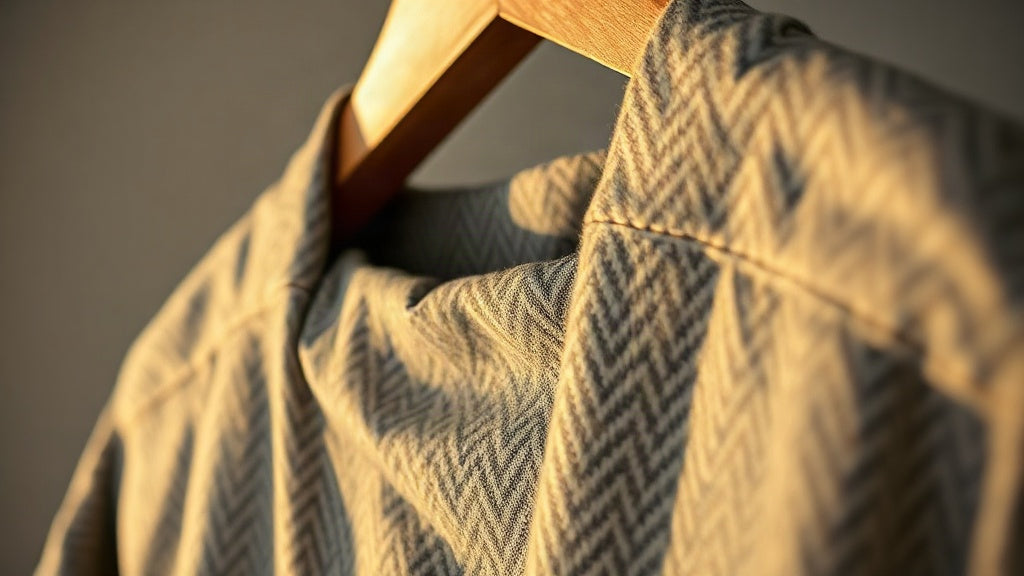
Wool herringbone jackets trace back to Scottish country estates and English tweeds, where the fabric pattern served a practical purpose before becoming aesthetic shorthand for understated refinement. The weave itself creates a diagonal zigzag pattern by reversing direction at regular intervals, producing a dense, directional surface that catches light differently depending on viewing angle.
The pattern emerged from functional necessity. Herringbone’s tight, reversing construction made it durable for hunting and estate work. Sheep’s wool, carded and twisted into multi-stranded yarn, took the weave naturally. The resulting fabric resisted wear and weather far better than plain weaves. Over time, landowners and their tailors elevated it from workwear to the foundation of country style.
By the early 1900s, the herringbone jacket had crossed from estate wear into tailored city wardrobes. It signaled not flash but familiarity with land, tradition, and the kind of dressing that improved with age. The pattern remains unchanged because the logic of it never wore out.
Understanding the Fabric: Weight, Hand, and Weave in a Wool Herringbone Jacket Guide
Not all herringbone wool is the same. The fabric’s character depends on fiber origin, yarn weight, and the density of the weave itself. Any honest wool herringbone jacket guide must start here, because the weave pattern you see on the surface is only as good as the fiber beneath it.
Fiber Quality and Origin
Scottish and English mills produce herringbone using wool from sheep bred across moorland and hillside pastures. The fiber diameter affects hand and drape. Coarser wool (25+ microns) yields stiffer, more durable fabric. Finer wool (19-23 microns) produces cloth with softer hand and more subtle sheen. English mills traditionally favor the middle ground: wool that holds structure without scratching, that develops character over years of wear.
Merino blends, increasingly common in contemporary production, add elasticity and reduce itch. A 10-15% synthetic blend (nylon or polyester) improves wrinkle recovery and lifespan. Pure wool herringbone, however, ages better. Repeated wearing softens the fiber. Creases set naturally. The jacket improves.
Weight Classes
Herringbone weight ranges from 12 to 16 ounces per linear yard. The lighter end (12-13 oz) suits three-season wear and layering over dress shirts. The heavier end (14-16 oz) performs better as an outer layer in cold months, holding shape under its own weight. Most contemporary jackets fall between 13-14 oz, a middle ground that works for office and weekend alike.

Pattern Density and Visual Weight
Close-woven herringbone appears more formal and refined. Looser weaves read more casual. The reversing diagonal pattern creates an optical illusion of movement, which photographers and stylists favor because it prevents flatness in photographs. In person, the texture draws the eye without decoration. A solid jacket becomes a neutral; herringbone adds depth without announcing itself.
The weave scale also matters. A fine, tight herringbone repeat (sometimes called a micro-herringbone) reads almost like a solid at a distance and suits professional environments well. A bold, open repeat carries more visual weight and fits country or weekend contexts more naturally.
Color and Dye Choices for the Herringbone Jacket
The herringbone pattern depends partly on two-tone yarn production. The most common herringbone jackets use threads of slightly different shades. This color interplay is where the fabric’s character lives.
Grey Herringbone
Grey herringbone represents the wardrobe neutral that is not quite neutral. A grey jacket with brown or charcoal undertones pairs with nearly everything: navy, burgundy, olive, cream, white. It works equally well over a dress shirt and knit tie or over a crew-neck sweater and jeans. Grey reads professional without formality. It is the default choice for anyone building a foundational sport coat.
Light grey appears almost silver in certain light, which reads more elevated. Mid-grey feels more grounded. Charcoal herringbone approaches black but with softer edges. Most professional herringbone falls into the mid-grey range because it suits office and weekend with equal ease.
Brown and Taupe Herringbone
Brown herringbone carries stronger visual weight. It appears warmer and more distinctly “country.” Lighter browns read more accessible and pair well with cream, white, and taupe. Darker browns require more intentional styling and suit fewer contexts. A light brown herringbone can work as a foundational piece. A chocolate brown herringbone signals specific aesthetic choices and requires more curated wardrobe planning.
Taupe herringbone occupies middle ground: neutral enough for professional contexts, warm enough to feel distinctive. It is less common than grey but increasingly available in contemporary collections.
Navy and Olive Herringbone
Navy herringbone appears more formal than grey. It reads closer to business casual. Olive herringbone leans heavily toward weekend wear and country contexts. Unless your wardrobe already includes several jackets, grey serves you better. If herringbone is your only sport coat, grey is the pragmatic choice.
Fit: The Architecture of a Herringbone Jacket
Herringbone’s structure allows for tailoring that other fabrics struggle to achieve. The tight weave holds crisp edges and clean lines. This is where the wool herringbone jacket guide becomes practical: knowing the fabric’s properties helps one evaluate fit with more confidence.
Shoulder and Chest
A herringbone jacket should fit precisely at the shoulder seam. The seam sits at the end of your shoulder bone, not on the muscle. Too wide feels sloppy; too narrow restricts arm movement. The chest should allow enough room for a dress shirt and sweater underneath without pulling. Button the jacket when standing; there should be no tension. A finger should slip under the button comfortably.
Length
The jacket’s hem should reach your knuckles when arms hang at rest. This rule holds across frame sizes. A jacket longer than knuckles lengthens the silhouette and appears dated. Shorter than knuckles reads incomplete. Aim for knuckle length and have it tailored if needed. The herringbone fabric tolerates minor adjustments without visible patching.
Sleeve
The sleeve should break a half-inch above your wrist bone when standing naturally. The cuff should show a half-inch of dress shirt underneath. When the arm bends, the sleeve moves with it without bunching. Herringbone’s crisp weave holds sleeve shape better than lighter fabrics, which is one reason tailors prefer working with it.
Darts and Seaming
A well-cut herringbone jacket often includes side body darts or subtle tapering to follow your torso shape. This is not decoration; it is architecture. The seaming should sit naturally without pulling across your back when standing relaxed. Chest darts improve fit without visible sewn lines.

Smart Casual: Pairing Herringbone with Denim
A herringbone jacket over denim represents the modern uniform for those who resist formalwear. The pairing works because of visual contrast. The structured, woven herringbone plays against the soft, broken-in surface of worn denim.
Denim Wash and Weight
Medium-to-dark indigo denim pairs safest with herringbone. Black denim reads too formal and creates visual heaviness. Light indigo appears too casual and can clash with the jacket’s texture. Medium blue allows the jacket to be the dominant piece, which is the goal. The denim recedes into the role of comfortable foundation.
Straight-leg or tapered denim works best. Slim fits risk looking over-styled. Wide-leg silhouettes compete with the jacket for attention. Straight-leg jeans anchor the look: classic, unaffected, essentially invisible except for the ease they provide.
Shirt and Layering
A crew-neck cotton sweater in cream, oatmeal, or charcoal sits under the jacket. A white or cream oxford cloth shirt works equally well. Avoid graphic tees or anything with visible text. The goal is quiet. The herringbone jacket carries the weight of the outfit; everything else supports it.
If the herringbone is grey, a burgundy sweater or navy crew-neck provides subtle color. If the herringbone carries brown tones, cream and white keep things clean.
Shoes and Finishing
Suede loafers, leather chukkas, or clean leather brogues work with herringbone and denim. Sneakers work too, though the visual effect tilts more casual. Canvas sneakers in white or navy feel appropriate. Designer sneakers risk looking trend-conscious, which works against the herringbone’s timelessness. A pair of well-worn leather derbies in tan or mid-brown will always read better than a novelty shoe, however expensive.
Professional Dressing: The Wool Herringbone Jacket Guide to Tailored Pairings
A wool herringbone jacket paired with grey or charcoal tailored trousers reads as office-appropriate without formal ceremony. This is the jacket’s most versatile identity, and the one most worth mastering before exploring casual combinations.
Trouser Selection and Color
If your herringbone is grey, medium grey or charcoal trousers create visual continuity. If the herringbone carries brown tones, light grey or taupe trousers keep things coherent. Navy trousers work with grey herringbone but create more formal distance. Avoid matching the jacket and trousers exactly; the slight tonal variation prevents the illusion of a suit.
Straight-leg or slightly tapered trousers suit herringbone best. The clean line of the trouser leg balances the visual weight of the patterned jacket. Wide-leg trousers can work but require more intentional styling.
Shirt and Tie Pairing
A white or cream dress shirt anchors the look. Pale blue works equally well. Avoid busy patterns that compete with the herringbone texture. The shirt should recede.
A knitted tie in neutral wool or cotton allows the herringbone to remain the dominant texture. Silk ties work too, but flat weaves can create visual flatness against herringbone’s dimensional surface. Consider a wool tie in burgundy, charcoal, or forest green. A knit tie in cream or taupe adds warmth without conflict.
Alternatively, skip the tie entirely. A crew-neck sweater under the jacket, with the collar of the dress shirt visible, creates texture and refinement without formality. This works especially well when moving between office and other environments.
Accessories and Shoes
Leather shoes in cognac, black, or dark brown suit herringbone in professional contexts. Oxford or derby styles read more classic. Loafers appear less formal but remain appropriate. Avoid patent leather or highly polished surfaces that catch light too dramatically against the matte depth of the weave.
A wool overcoat in navy, charcoal, or camel worn over the herringbone jacket extends its season. The overcoat’s length and weight provide structure that makes the herringbone read as a proper foundation layer rather than a freestanding piece. A soft leather briefcase or unstructured tote in tan or cognac completes the picture without competing.
A garment brush kept at the office takes thirty seconds and extends the life of any wool jacket considerably. Keep one at your desk.
The Knitted Tie: Texture Meets Pattern
A knitted tie deserves specific attention because it represents the herringbone jacket’s ideal companion in terms of material harmony. Both pieces involve weaving and construction visible at close range.
Why Knit Over Silk
Knitted ties offer texture that plays well against herringbone’s own dimensional surface. Silk ties, by contrast, are smooth and reflective. They sit on top of the herringbone without engaging it. A knit tie integrates. The two patterns exist at different scales and weave directions, so they never compete. This is functional, not accidental.
Color Selection
Burgundy knit ties pair with grey herringbone. Deep forest green works equally well. Charcoal or navy appear safer but less considered. Cream or ivory knit ties add warmth, especially if the herringbone carries cool tones. Brown herringbone suits caramel or rust knit ties without appearing costume-like.
Width and Proportion
A knit tie sits slightly narrower than silk equivalents, typically 2.5 to 3 inches at the widest point. This narrowness prevents the combination from reading as heavy or dated. The knit tie’s lightness balances the herringbone jacket’s pattern density.
The knot should be small and compact. A four-in-hand knot suits knitted ties better than broader knots that require more fabric volume.
Care and Longevity
A herringbone jacket improves with age if cared for consistently. Proper maintenance extends lifespan and deepens character.
Regular Wear and Resting
Wear the jacket regularly but not constantly. Rotation allows the fibers to recover. A jacket worn three times weekly outlasts one worn every day. The wool needs time to spring back into shape and air out any absorbed moisture or odor.
Hang the jacket on a wooden hanger, never plastic. The shoulders of a wooden hanger support the weight properly. Wooden hangers also allow air circulation. Store in a cool, dry closet away from direct sunlight. Sunlight fades color and weakens fibers over time.
Spot Treatment and Dry Cleaning
Brush herringbone gently with a soft-bristled garment brush after wearing to remove dust and surface debris. This simple step extends the interval between dry cleanings considerably. Dry clean only when necessary, not after every wear.
A quality dry cleaner understands herringbone. They know the fabric’s weight, the risks of shrinkage, the importance of proper pressing. Steam pressing at moderate temperature is correct. A dry iron on high heat damages the weave’s surface irreversibly. If a cleaner returns your jacket with pressed-flat lapels and a shine on the elbows, find another cleaner.
Moth Prevention
Herringbone’s purity makes it attractive to moths. Cedar blocks or lavender sachets stored with the jacket deter insects without chemical odor. Check the jacket monthly for any sign of moths or damage. This vigilance prevents catastrophic loss.
Minor Repairs
Small tears or pulls should be addressed immediately. A tailor can often weave damaged areas invisibly if caught early. Waiting allows the damage to spread. Thread of matching color matters less with herringbone because the weave’s pattern obscures imperfect color matching more effectively than solid fabrics.
| Maintenance Task | Frequency | Purpose |
|---|---|---|
| Gentle brushing | After each wear | Remove surface dust and debris |
| Airing and resting | Between wears | Allow fibers to recover and odors to dissipate |
| Spot treatment | As needed | Address minor stains before they set |
| Dry cleaning | 2-3 times yearly | Deep clean without damaging fibers |
| Moth prevention | Year-round storage | Protect from insect damage |
| Minor repairs | Immediately upon discovery | Prevent small damage from spreading |
The Herringbone Jacket as Foundation Piece
A single herringbone jacket returns utility across decades of wearing. It works in professional settings, pairs with weekend denim, layers under overcoats, and stands alone as a considered choice. The pattern’s depth means it reads as intentional styling, not a default uniform.
This is partly why the herringbone jacket endures. It suits both men and women equally well. It improves with age. It requires no trend cycle updates. A herringbone jacket purchased thoughtfully in 2026 will appear relevant in 2046 because the pattern itself carries no time marker. Herringbone existed in 1890. It existed in 1990. It will exist in 2050.
The investment value lies not in resale but in the simple mathematics of cost per wear. A jacket worn fifty times per year for twenty years costs pennies per occasion. A jacket worn once per month for thirty years costs differently but arrives at the same truth: longevity beats trend. This is the central argument of any serious wool herringbone jacket guide, and it holds.
Start with grey. Add a second jacket in brown or taupe only when the first no longer fits or when your wardrobe has grown large enough to absorb the addition without compromise. Move slowly. The herringbone jacket rewards patience.
How to Know If Herringbone Suits Your Wardrobe
Consider three questions. First: does your existing wardrobe include navy, grey, cream, or burgundy? If so, a grey herringbone integrates without friction. Second: do you dress across more than one context regularly, office and weekend, formal and casual? Herringbone moves across those registers more readily than most sport coats. Third: are you building for the long term or filling a gap? If the former, herringbone is a sound starting point. If the latter, a solid mid-grey flannel may serve more immediately.
The herringbone’s pattern also suits a range of body types. The diagonal lines neither widen nor narrow a silhouette in the way that strong horizontal or vertical stripes do. It is, in this sense, a forgiving pattern as well as a durable one.
FAQ
Are herringbone jackets still in style?+
Herringbone patterns carry no trend liability because they carry no trend origin. The weave has remained consistent for over a century because the logic of it is sound. A herringbone jacket works equally well styled with contemporary clothing or pieces from decades past. Style implies fashion cycles. Herringbone exists outside them.
How should a herringbone jacket fit?+
The shoulder seam should sit at the end of your shoulder bone. Sleeve length should reach a half-inch above your wrist. The hem should reach your knuckles. The chest should allow room for a finger under the button when buttoned. Length and fit matter more than tight construction. A jacket that fits well years from now, as your body changes, serves better than one tailored only to your current frame.
Is herringbone wool good quality?+
Herringbone quality depends on fiber origin and mill construction. English and Scottish mills produce herringbone known for durability and aging characteristics. Pure wool outperforms blends in longevity, though blends recover from wrinkles more readily. Weight between 13-14 ounces balances durability with wearability. Density of weave matters: tightly woven herringbone holds shape better than loosely constructed versions.
Should I size up when buying a wool herringbone jacket?+
Sizing depends on how the jacket will be worn. A jacket intended for layering over sweaters should fit roomier through the chest. A jacket worn mostly over dress shirts can fit closer to your actual measurements. Wool can shrink slightly with improper cleaning, so choosing a size that allows wearing comfort is practical. Have any jacket tailored after purchase rather than buying oversized and hoping it settles correctly.
How often should I dry clean a herringbone jacket?+
Dry clean only when necessary, not after every wear. Regular brushing and airing between wears removes surface debris and odors without requiring chemical treatment. Most herringbone jackets need dry cleaning two to three times yearly. More frequent cleaning weakens fibers and increases cost without proportional benefit.
What is the difference between herringbone and tweed?+
Tweed refers to a category of rough-surfaced wool cloth, traditionally produced in Scotland and Ireland, that encompasses several weave patterns. Herringbone is one specific weave structure that can appear in tweed or in smoother woolen cloths. A herringbone tweed combines both: a reversing diagonal weave in a coarser, textured wool. The distinction matters when selecting fabric weight and hand. Smooth herringbone in 13-14 oz wool suits city and office wear; herringbone tweed, typically heavier and more textured, belongs to country and weekend contexts.
Shop the edit
Old Money Jackets
Pieces from our Old Money Jackets collection, chosen to go with this article.