Timeless pieces. No logos. No noise.

Old Money Menswear Essentials: Building a Foundational Wardrobe
Build a refined old money wardrobe foundation: navy blazer, camel coat, oxford shirts, quality trousers, suede loafers, and minimal accessories. Pieces designed to combine endlessly and age gracefully.
In this article11 sections
- What Old Money Menswear Actually Means
- The Tailored Navy Blazer: Non-Negotiable
- The Camel Overcoat: Investment, Not Impulse
- Oxford Cloth Button-Downs: The Everyday Uniform
- Trousers: The Foundation of Proportion
- Suede Loafers: The Shoe That Earns Its Keep
- Knitwear: The Layering Essential
- The Forgotten Details: Accessories and Hardware
- Assembling the Rotation: Real Outfits
- Why This Approach Works in 2026 and Beyond
- Frequently asked questions
What Old Money Menswear Actually Means
The old money aesthetic doesn’t announce itself. It whispers. A man dressed this way owns pieces that cost what they look like they cost, which is to say, nothing extravagant. The fabrics are good. The cuts are clean. Nothing is loud. The loafers have been polished the same way for fifteen years. The navy blazer was probably expensive once; now it simply looks inevitable.
Old money mens style essentials rest on a foundation that ignores trend cycles. This isn’t about logos or seasonal color shifts. It’s about understanding that a well-cut pair of wool trousers, a fine cotton shirt, and good leather will outlive most things you buy. The old money man doesn’t refresh his wardrobe every season. He adds to it with care. When something wears out, he replaces it with the same thing, in a better version if one exists.
The philosophy here is inheritance. Whether the pieces were actually inherited or purchased yesterday, they should look as though they could have been passed down. That durability, that timelessness, is the entire point.

The Tailored Navy Blazer: Non-Negotiable
Every man who understands clothes owns a navy blazer. Not a sport coat in navy. A blazer. The distinction matters. A blazer has structure. It has buttons that feel deliberate. When you button it, something shifts in posture and presence alike.
The cut should be simple. A single-breasted front, two buttons, notch lapels. The shoulders fit without pulling. The jacket ends at the base of the thumb when arms hang at the sides. No excess fabric in the body. This isn’t about slim-fit fashion; it’s about tailoring that lets the shirt and tie breathe underneath without billowing.
Navy works because it reads formal enough for a dinner, professional enough for Wednesday, and relaxed enough to wear with weekend trousers on Saturday. It’s the blazer you reach for when you’re not sure what to wear and you don’t want to think about it.
Fabric matters here. Wool. Not wool-polyester blends, though those have their place in travel contexts. A proper blazer works best in pure wool or a very high wool content. Super 100s or Super 110s feel lighter on the body and drape better than heavier counts. The fabric should have some weight to it nonetheless. Light fabric reads cheap, even when it costs money. The hand should feel dense and faintly smooth, not slippery.
Fit is the great equalizer. A blazer from a mid-price retailer, taken to a tailor for sleeve shortening and a slight suppression through the waist, will outperform a twice-priced off-the-rack version worn as purchased. Budget a modest amount for alterations when you buy; consider it part of the acquisition cost.
The Camel Overcoat: Investment, Not Impulse
If the blazer is your year-round workhorse, the camel coat is your statement of intent. Not in volume, but in clarity. When you wear a camel coat, it registers. The color does the work. The cut should disappear.
Camel pairs with most things in the palette: navy trousers, charcoal, olive, gray, cream. Worn over a suit or with jeans and a sweater, it holds its ground. The coat should fall somewhere between knee and mid-calf. Not so short that it reads like a sport coat; not so long that movement becomes awkward. Mid-weight wool is the correct choice. You want something that moves with the body, not against it.
Look for coats with restrained details. A half-belt at the back, if anything at all. Slant pockets feel more refined than patch pockets. Horn or dark resin buttons. The lining should be solid and understated. Some men prefer a herringbone wool in camel; others choose plain weave. Both work. Plain weave feels slightly more modern; herringbone reads more traditional and has more visual depth up close.
The cultural resonance of the camel coat is worth noting. It appeared on the backs of postwar American professionals who wore it as a kind of civilian uniform, an antidote to the flashier silhouettes of the period. That association with quiet authority has never fully dissolved. A well-cut camel coat worn over a suit still carries that weight today, even when the wearer knows nothing of the history.
This is a coat that will cost money. It should. You’ll wear it for twenty years. The price per wear, calculated over that span, becomes almost irrelevant.

Oxford Cloth Button-Downs: The Everyday Uniform
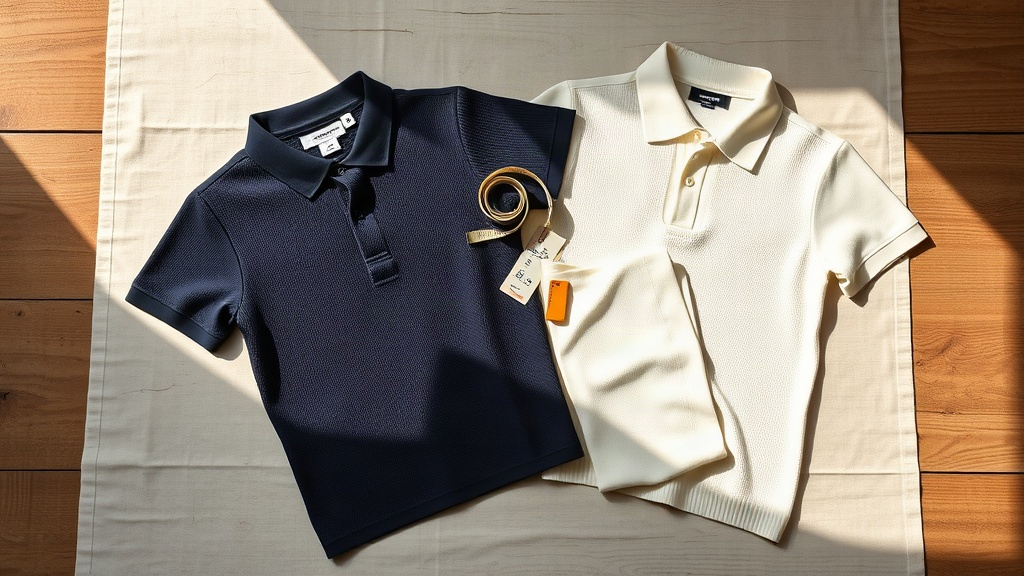
Oxford cloth has texture. You can see it. The weave is intentional, slightly nubby, and it catches light in a way that broadcloth does not. A man in an oxford shirt looks considered in a way that smooth fabrics rarely achieve.
Stick to colors that don’t date. White, of course. Light blue. Cream. A subtle tattersall or fine gingham is acceptable for warmer months. Avoid heavy patterns. The shirt should be the foundation for everything else, not a conversation starter in itself.
The fit should be straight. Not athletic, not oversized. The shirt should be tucked or untucked depending on context, but it should work both ways. Sleeves should come to the wrist bone. When the jacket goes on, a quarter-inch of cuff should show. Not more; not less either.
Cotton matters. Cotton-polyester blends exist for a reason: they’re easier to care for and resist wrinkling through a long day. But pure cotton breathes better and develops character over time. A cotton oxford from a good maker will soften with washing, not pill or fade badly. After three years, it looks better than it did new. That is not an exaggeration.
Quality oxford shirts cost between forty and eighty dollars if you’re patient about sales. They last ten years with reasonable care. Three is a workable minimum. Rotate them. Let them air between wears; this extends their life considerably and keeps the cotton from fatiguing at the collar.
Trousers: The Foundation of Proportion
Two silhouettes matter for old money mens style essentials: straight-leg and pleated.
Straight-leg trousers work with almost everything. They read modern without trying. The cut should sit at the natural waist, not slung low. The fabric should have a small amount of give; pure wool can feel stiff through the hip on a full day. A two-percent elastane blend softens the hand without changing the visual. The break at the shoe should be slight. A small crease touching the top of the shoe is the target. Nothing more.
Pleated trousers are more traditional. Two pleats at the waist, one on each side, pointing toward the fly when ironed flat. They give hip room without appearing baggy at the thigh. Pleated trousers drape differently than flat-front; they move more naturally when you sit. For anyone spending sustained time at a desk, that distinction is worth considering.
Colors: charcoal gray, navy, cream, camel, olive, burgundy. Dark denim when the context requires it. Avoid anything with a sheen. Matte finishes age better and read quieter. The whole point is that these trousers work with most of what hangs above them. They should recede into the background.
| Trouser Type | Best For | Fit Consideration |
|---|---|---|
| Straight-leg | Everyday wear, modern versatility | Works with most shoe shapes and silhouettes |
| Pleated | Office, formal settings, sitting comfort | Requires proper waist fit to avoid excess fabric |
| Flat-front chino | Smart casual, warmer months | Looks best on slimmer cuts; high waist preferred |
Suede Loafers: The Shoe That Earns Its Keep
Loafers occupy the intersection of formal and casual. Dressed with a suit, they read as business. Worn with chinos and a sweater, they read as weekend. Few shoes travel between contexts as naturally.
Suede is the preferred material for this purpose. Leather loafers can look dated if they’re too glossy. Suede softens that edge and resists the mirror-shine that signals effort rather than ease. Color matters. Brown suede works with more combinations than any alternative. Burgundy is an excellent second choice. Navy suede reads with confidence and pairs particularly well with gray trousers.
The fit should be snug without being constrictive. A loafer that requires a full minute of wrestling will never feel right, regardless of its construction. The sole matters more than most men consider at point of purchase. Leather soles are traditional and develop a fine patina; they are also slippery on marble and wet pavement. A rubber sole with a leather appearance strikes a better balance between refinement and practicality for daily wear.
Break in a new pair for an afternoon at home before wearing them out. Use shoe trees after each wear. Brush the nap regularly with a soft suede brush to keep the surface from matting. Good suede loafers treated this way can last fifteen years easily. At year five, the toe has softened and the sole has shaped itself. That is when they are at their best.
Knitwear: The Layering Essential
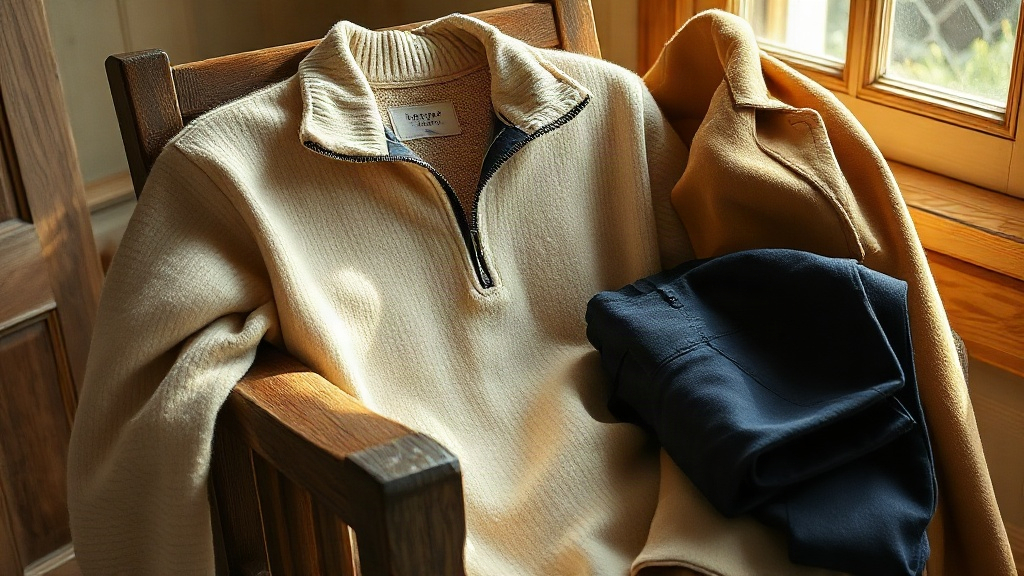
A cashmere crew neck or a half-zip pulls together more outfits than almost any other single piece in a wardrobe. The texture signals care without announcing it. The weight should be substantial enough that the sweater doesn’t pill with normal use, but not so heavy that it feels stiff over a collar. Hand-feel matters considerably. Run your fingers across the knit before purchasing; if the surface catches or pills against your palm, it will do the same against your shirt after three washes.
Cream, navy, and camel are the baseline colors. Gray works across the palette. Burgundy is a refined option that pairs particularly well with camel trousers. Stick to solids. A subtle cable knit is acceptable and adds quiet texture. Avoid any colorway or pattern that will register as seasonal.
The fit should be relaxed but not oversized. The sweater should end at the hip bone. Sleeves should come to the wrist. A half-zip is slightly more versatile than a crew neck because it functions both under a jacket and as an outer layer in mild weather. Both are worth owning over time.
Cashmere requires care that is simple but non-negotiable. Fold, don’t hang; hanging distorts the shoulder over time. Use cedar blocks or lavender sachets to deter moths. Wash in cool water with a gentle detergent formulated for delicates. Air dry flat on a clean towel. A cashmere sweater treated this way will last twenty years. Put it in a machine dryer and it won’t see five seasons.
The Forgotten Details: Accessories and Hardware
A signet ring. One. Worn on the pinky of the non-dominant hand. The stone should be understated. No flash. Silver, gold, or a simple hardstone. It reads as a family piece even if it isn’t. This is the only jewelry most men dressed in this way wear regularly.
A watch with a simple face. Dark dial, legible numerals. Leather or metal bracelet. The watch should disappear into the wrist. Nobody should notice it until you glance at it to check the time. Restraint matters far more than the brand on the dial.
A leather belt. One in brown, one in black. Simple buckles with no ornamentation. These should be good-quality full-grain leather that develops a patina over years of use. A belt is worn constantly. It deserves more attention at purchase than most men give it.
Socks matter more than most people think. They are a small place to be precise. Wool or merino for cooler months. Cotton for summer. Dark colors that recede: navy, charcoal, black, camel. Thin enough that they don’t feel like insulation inside the shoe; thick enough that they hold their shape. They should match the trouser or sit somewhere neutral. No patterns.
A pocket square is optional. If you wear one, it should not match the tie. A small geometric or subtle color variation works. Fold it loosely and tuck it in the breast pocket; roughly half should show. This is a small detail that signals intention rather than decoration.
Assembling the Rotation: Real Outfits
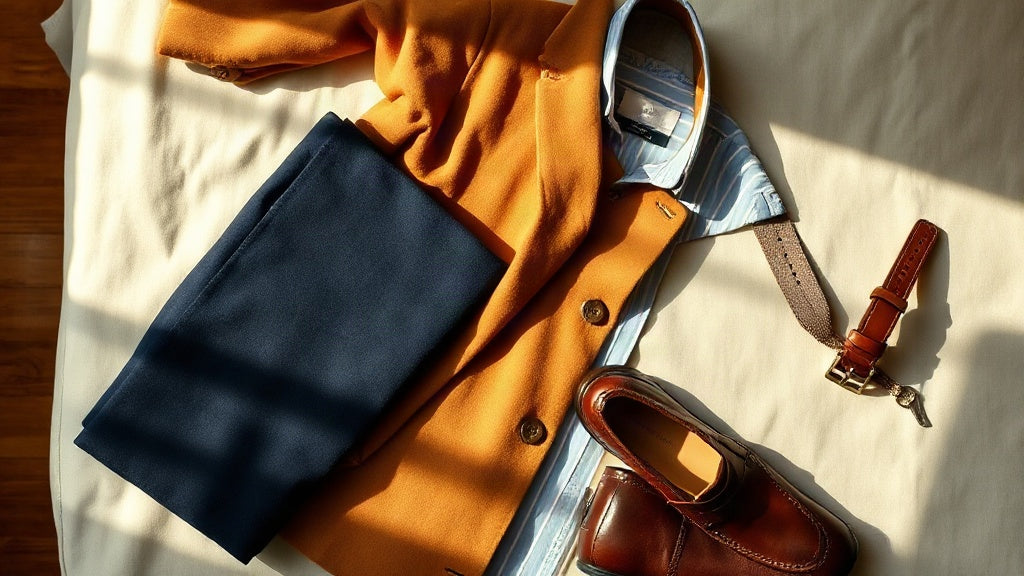
One navy blazer, one camel coat, three oxford shirts, two pairs of tailored trousers, two pairs of chinos, one pair of suede loafers, one pair of oxford shoes, two sweaters, a watch, a belt, a signet ring. This is a month’s worth of outfits with almost no repetition, if the combinations are worked through with any care at all.
Monday: navy blazer with a white oxford, charcoal trousers, suede loafers, the leather belt, the watch. Tuesday: cream oxford, camel trousers, suede loafers. Wednesday: the camel coat over a navy blazer and cream oxford, charcoal trousers, oxford shoes. Thursday: charcoal crew neck, chinos, suede loafers. Friday: blue striped shirt, camel trousers, suede loafers.
The combinations expand naturally from there. Add a second oxford in a different color. Add a second pair of loafers in burgundy. The wardrobe becomes less about trends and more about combinations. After a few months, the decision about what to wear in the morning takes less than thirty seconds. The system does the thinking.
Why This Approach Works in 2026 and Beyond
Fashion moves fast. Trends arrive and leave. The old money mens style essentials wardrobe ignores most of that noise. A navy blazer looks the same now as it did in 1985. A camel coat won’t change. Oxford cloth doesn’t trend. This isn’t about being timeless in a vague sense. It’s about choosing pieces that work because of their fundamental construction, not because a designer decided they were in season.
The math is straightforward. Spend more per piece, buy fewer pieces, keep them longer. A three-hundred-dollar blazer bought once and worn for fifteen years costs twenty dollars per year. A sixty-dollar blazer replaced every eighteen months costs forty dollars per year and produces twice the waste. Most men feel the sticker price rather than the arithmetic. But the arithmetic is precisely why it matters.
Building this wardrobe takes patience. You won’t buy everything at once. You shouldn’t. Start with the navy blazer and one good oxford shirt. Add the camel coat in fall. Add suede loafers when the budget allows. A year into it, these pieces will form most of the regular rotation. Two years in, you’ll have enough depth that you rarely repeat an outfit in a work week. That’s not an achievement to announce; it’s simply a quiet, functional wardrobe.
This is clothing designed to fade into the background. The better you dress this way, the less anyone notices what you’re wearing. They notice the person instead. That is the entire point.
Frequently asked questions
What to buy for old money style men?+
Start with the foundations: a well-tailored navy blazer, a camel overcoat, quality oxford shirts in white and light blue, charcoal and camel wool trousers, suede loafers, and one quality cashmere or wool sweater. Add a leather belt, a watch with a simple face, and one signet ring. These pieces combine in dozens of ways and form the basis of any refined wardrobe without demanding constant refreshment.
What is the 3-3-3 rule in fashion?+
The 3-3-3 rule suggests owning three items in each color of your wardrobe palette. For old money dressing, this means three pieces in navy, three in charcoal, three in cream or white, and so on. This ensures sufficient rotation and combination without overdoing volume. It’s practical for building a capsule wardrobe that functions across seasons without redundancy.
How to style old money for men?+
The key is restraint. Pair classic pieces with quality fabrics and a precise fit. Layer a cashmere sweater under a navy blazer. Wear oxford shirts with tailored trousers and suede loafers. Keep accessories minimal: one watch, one belt, one ring. Colors should be muted and neutral. The goal is for the clothing to disappear and the person to remain visible.
Does old money style require significant spending?+
Not necessarily. The aesthetic values durability and good construction over labels and price tags. A well-made blazer under two hundred dollars, paired with a thirty-dollar oxford shirt that lasts five years, costs less long-term than fast fashion replacements. Build slowly and choose each piece with care. The cost is recovered through longevity.
Can the old money wardrobe work for younger men?+
Yes. The fundamentals work regardless of age. A twenty-five-year-old in tailored trousers and a quality blazer reads as thoughtful and self-possessed. The pieces may be acquired more gradually on a younger budget, but the approach is identical: quality basics that work together. Starting early means these pieces age alongside the wearer, developing fit and character that no new purchase can replicate.
What fabrics define the old money aesthetic?+
Wool in various weights is the central fabric: flannel and Super 100s for blazers and trousers, mid-weight for overcoats. Cotton Oxford cloth for shirts. Cashmere or high-grade merino for knitwear. Suede and full-grain leather for footwear and belts. The common thread is natural fiber construction with enough weight and density to drape well and hold its shape over years of wear.
Shop the edit
Old Money Jackets
Pieces from our Old Money Jackets collection, chosen to go with this article.